
Neck pain can be common; there is a good chance that you have experienced some type of neck discomfort at one time or another. The neck supports your head, which can weigh 10 pounds or more! In addition to supporting your head it needs to be able to functionally move in all three planes of motion. Injuries and imbalances can cause cervical vertebrae to move out of their correct position (Subluxation). Tendons, ligaments and muscles can become inflamed and worn out, the discs separating the cervical vertebrae can herniate or rupture and the nerves can be damaged or irritated from the misalignment.
The neck changes as we age. Arthritic changes in the spinal bones such as abnormal bony growth, disc degeneration, and muscle or ligament deterioration may change the normal healthy curve of the neck and result in irritation of the nerves in the spine.
Problems of the neck if left untreated can lead to pain symptoms experienced in the face, shoulder arm, wrist and hand as well as decreased motion. Chiropractic treatment can help ease pressure on the nerves and prevent the need for surgery
The chiropractic approach to treating neck pain is to find the source of the neck pain and correct it. By correcting the source of the problem your body is able to heal itself naturally. Neck pain often responds dramatically to the restoration of normal spinal function through Chiropractic care.
Whiplash
Whiplash is one of the most common and well known injuries from a car accident. This occurs when the force of the accident ‘whips’ the head violently from direction to another farther than normal limits, resulting in muscles, tendons and ligaments that support the spine are overstretched, torn or irritated. The soft, cushioning discs that occupy the space between the spinal bones can herniate or rupture. Whiplash often occurs when a vehicle stops suddenly in a car crash or is struck from behind. Either of these two actions causes things in the vehicle to be thrown forward – including passengers. A seat belt will keep a person’s body from being thrown forward, but the head may snap forward, then backward, causing a whiplash injury in the neck. In addition to car accidents, whiplash can be caused by roller coasters and other amusement park rides, sports injuries, or being punched or shaken. (Whiplash is one of the hallmarks of shaken baby syndrome).
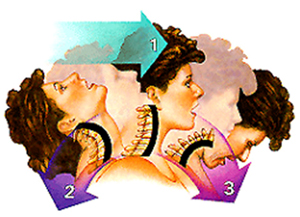
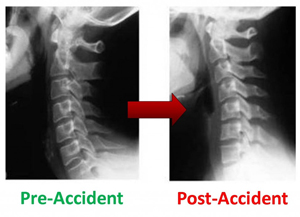
Whiplash may not be a minor injury, it may have caused spinal damage. Frequently, lifelong health problems begin as a whiplash injury that was dismissed as minor at the time. Any trauma to the spine can disturb the normal position and motion of the vertebrae, affecting nearby muscles, ligaments and discs. Doctors call these vertebral subluxations. The vertebrae protect the spinal cord so even a small disturbance can have a profoundly adverse affect on the delicate nerve tissue.
Treatment will vary depending to the severity of your condition. A series of adjustments will most likely be performed. An adjustment is a precisely applied force to an area to help restore balance to the spine and relieve pain and stiffness. Lifestyle modifications such as the reduction of stress or dietary changes may be suggested.
Isn’t it time you tried chiropractic treatment for you and your family?
If you are experiencing any of the common symptoms below, please call our office now to schedule an appointment.
Common symptoms of whiplash include blurred vision, difficulty swallowing, irritability, fatigue, dizziness, Sore or still neck, Pain, numbness, or tingling in the back, arms, shoulders, and hands, Reduced ability to move the head, pain between the shoulder blades, pain in the arms or legs, pain in the feet and hands, nausea, ringing of the ears, and vertigo.
**OFTEN, YOU FEEL PAIN AND STIFFNESS IN YOUR NECK FOR THE FIRST FEW DAYS FOLLOWING A WHIPLASH INJURY. THEN, YOU FEEL BETTER, BUT THE PAIN AND STIFFNESS MAY COME BACK SEVERAL DAYS LATER. THE DISCOMFORT YOU FEEL MAY INVOLVE SURROUNDING MUSCLE GROUPS IN YOUR HEAD, CHEST, SHOULDERS, AND ARMS.